Turning a Support Chatbot Into a Revenue Channel
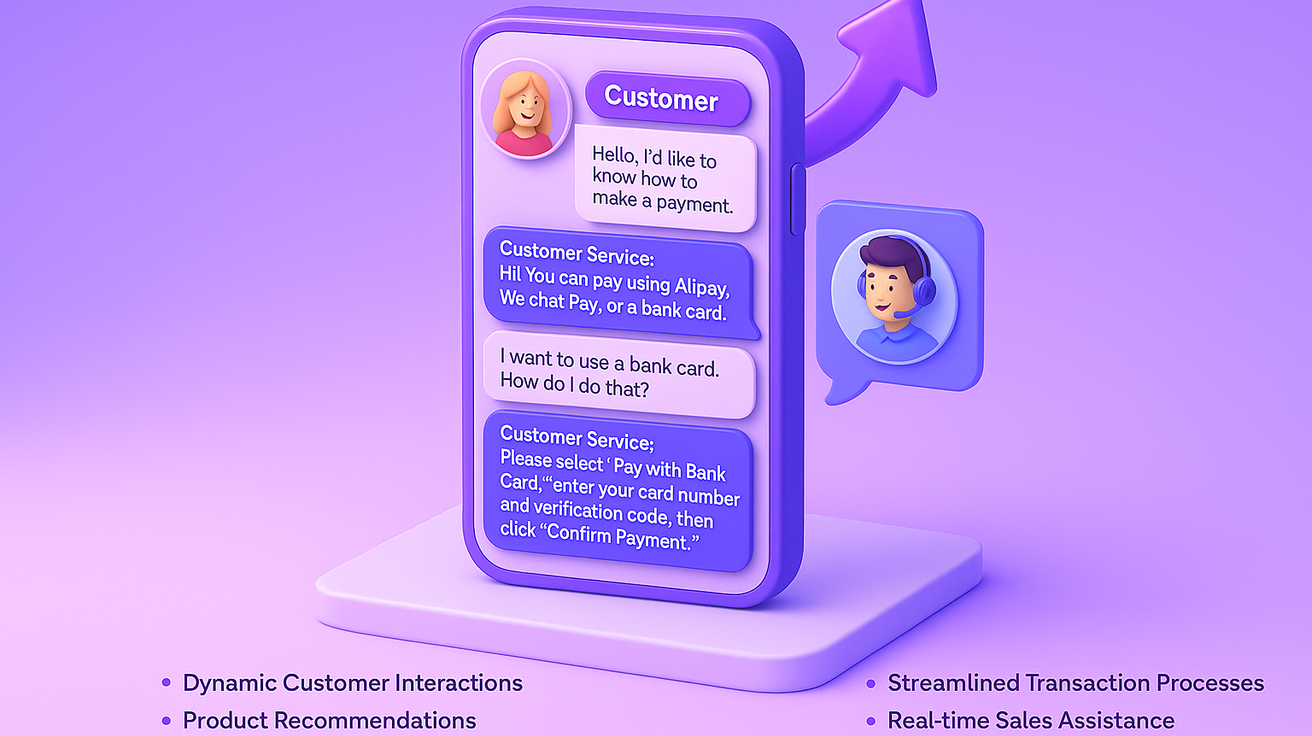
Most support chatbots are built to close conversations. Answer the question, resolve the ticket, keep the human queue short. That is a reasonable objective, and it is also why a large share of the buying intent that passes through a support channel is never acted on. Someone asks whether a product ships to their address, whether two models are compatible, or whether a plan can be changed mid-term. Those are service questions on the surface and purchase questions underneath, and a bot optimised purely for deflection answers them and lets the person go.
Extending a support channel into a revenue channel is less about adding a sales script and more about deciding, deliberately, which conversations are allowed to change direction and what happens when they do. Done carelessly it degrades the support experience that earned the channel its traffic in the first place. Done well it uses attention you already have, from people who chose to start a conversation with you, at the moment they are closest to deciding.
Where buying intent actually appears#
The useful starting point is not a new capability but a read of your existing transcripts. In most support logs there is a recognisable band of questions that sit between service and sales: availability, compatibility, sizing, delivery timing, plan differences, whether an existing account can do something it currently cannot. These are asked by people who have already chosen you far enough to ask.
Before changing anything, pull a month of conversations and classify them by hand into three buckets: pure service on an existing purchase, pure information with no purchase context, and questions that imply an unmade decision. The third bucket is your addressable set. Its size, and the products it clusters around, should decide whether this work is worth doing at all and where to point it first. Teams that skip this step usually end up applying sales behaviour uniformly across every conversation, which is the fastest way to make a support channel feel like a sales channel that happens to answer questions.
Separating a service reply from a buying signal#
Once you know which questions carry intent, the bot needs to distinguish them at runtime rather than by keyword. The practical approach is a classification step that runs alongside the answer, not instead of it: the assistant resolves the question first, then decides whether the conversation qualifies for a second move.
Keep the qualifying conditions explicit and few. A conversation about a fault on an existing order should never qualify, regardless of what the model infers. A conversation that opened with a delivery complaint should not qualify later in the same session. Encoding these as hard exclusions, rather than leaving them to a prompt instruction, is what stops the channel embarrassing you in the cases that matter most.
Recommendations that are worth making#
Product suggestions are the easiest thing to add and the easiest to get wrong. A recommendation is only useful if it is grounded in something the system actually knows: order history, the item currently being discussed, stock and delivery data for the customer’s location, entitlements on their existing plan.
That grounding is a data problem before it is a model problem. If your catalogue does not encode compatibility, the assistant cannot tell a customer whether two items work together, and a fluent guess is worse than no answer. In practice the work splits roughly as follows.
- Product data: attributes, compatibility, substitutions, current stock and lead times, exposed through an interface the assistant can query
- Customer context: what this person has bought, what they own, what they are entitled to, retrieved under the same access rules the rest of your systems use
- Boundaries: which categories may be suggested at all, and which are excluded for regulatory, contractual, or margin reasons
Keeping suggestions to one#
The strongest constraint we apply is a limit of one suggestion per conversation, offered once. A bot that recommends repeatedly reads as a bot that is not listening, and the customer’s next move is to ask for a human or to leave. One well-grounded suggestion, tied to the question just answered, is both easier to evaluate and easier to defend when someone asks why the channel said what it said.
Handing the conversation to a person#
Some conversations should not be closed by the assistant at all. Higher value purchases, anything with a contract attached, anything where the customer has asked a question the assistant cannot ground: these should route to a person, with the transcript, the classification, and the retrieved context attached.
The handover is where most of these projects succeed or fail commercially. If the sales team receives a bare notification and has to re-ask what the customer already explained, the customer repeats themselves and the advantage of catching them mid-decision is gone. Treat the handover payload as a deliverable in its own right, and agree with the receiving team what it must contain before you build the routing.
Cross-sell and upsell without damaging support#
Cross-selling inside a support conversation carries a specific risk: the customer came for help, and an offer arriving before the problem is resolved reads as an attempt to profit from their difficulty. The rule that holds up is sequencing. The service outcome completes first, the customer confirms it, and only then may a related offer appear.
Upsell to an existing plan is a narrower case and generally safer, because the customer has usually surfaced the limit themselves. Someone asking why a feature is unavailable has described a gap. Naming the plan that closes it is an answer, not a pitch, provided it is stated plainly and the conversation continues either way.
Completing the purchase in the channel#
If a conversation reaches the point where the customer wants to buy, every step that moves them elsewhere costs conversions. Passing a prepared cart, a payment link, or a pre-filled amendment back into the same thread removes the gap where intent leaks away.
This is also where the integration burden becomes real. Order creation, payment, and account changes touch systems with their own permissions, audit requirements, and failure modes. Give the assistant scoped, auditable actions rather than broad write access, and design the failure path first: what the customer sees when the payment provider times out matters more than the happy path, because they are already committed at that point.
Response time and the decision window#
Speed is the one advantage this channel has that is difficult to replicate with staffing. A question answered while the customer is still on the page is answered inside the window where they are deciding. The same question answered by email the following morning arrives after they have decided something else.
Worth being precise about what this buys you. It is not that faster answers persuade people; it is that slow answers remove you from consideration. Measure your current time to first useful answer in the intent band specifically, not across all tickets, since the average is usually dominated by simple deflections that were already instant.
What the transcripts tell you#
Every conversation produces a record of what customers asked, in their own words, at the point of not yet knowing. Reviewed regularly, that record is a better source of product and content priorities than most survey work, because nobody was prompted.
The recurring findings are consistent across deployments: questions that indicate a missing or ambiguous product attribute, comparisons customers make that your own categorisation does not, and objections raised repeatedly that no page currently addresses. Route these to the teams who own the pages and the catalogue rather than leaving them in a support dashboard, and the channel improves conversion in places the bot never touches.
What to measure before claiming it works#
Attribution here is easy to overstate. A customer who asked a question and later bought would in many cases have bought anyway, and counting every such purchase as chatbot revenue produces a number nobody outside the project believes.
A defensible measurement plan needs three things: a holdout, so some qualifying conversations receive service only and the difference is observable; a fixed attribution window agreed before launch rather than after the first report; and support metrics tracked alongside revenue, since a rise in sales next to a fall in resolution rate or satisfaction is not a result you want to keep. Publish the method with the number. Uplift figures quoted without a comparison group are the reason most internal audiences discount this category of claim.
Deciding which conversations may change direction, where the human handover sits, and what evidence would prove any of it worked is the kind of design work we go through in our hands-on ELEVATE-AI workshop. There is more on conversational AI and deployment patterns in our Infra Modernisation hub.
As an AWS Premier Partner with the AWS Generative AI competency, we build this inside your own AWS account, against your own catalogue, order, and customer systems. If you want to look at your current support transcripts and work out whether the intent is there to justify it, book a discovery call.