How Axrail Optimizes AI-Driven Data Lakes with AWS for Enterprises in Malaysia
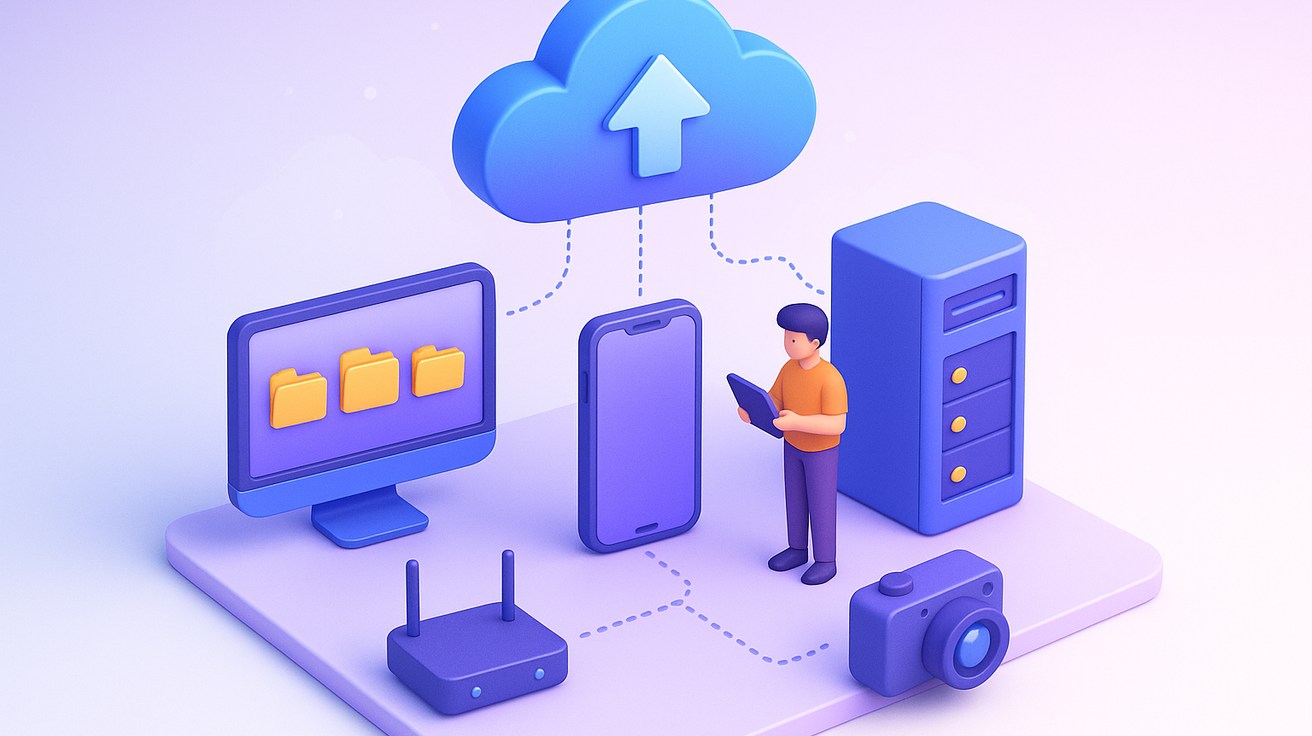
Big data. Data lake. Artificial intelligence. If you run a business in Malaysia, you have heard all three terms repeated at conferences, in vendor decks and across LinkedIn, usually with the implication that you are already behind.
The terms are worth cutting through, because the underlying decisions are real ones. How important are data lakes and AI to an operating business? How do they actually work? How are they related to each other? And, more practically, where does a team start without committing to a two-year platform programme first?
This post walks through what an AI-driven data lake on AWS is, what it changes, and how we approach building and running one for enterprises in Malaysia.
Why AI Data Lakes Matter to Your Business#
Most enterprises do not have a data shortage. They have a data location problem. Point-of-sale records sit in one system, finance in another, customer conversations in a third, and the operational logs that would explain any of it are retained somewhere else on a different schedule. Every question that crosses two of those systems becomes a manual exercise, and the answer arrives after the decision has been made.
A data lake addresses that by giving raw data from all of those sources one place to land, in its original form, before anyone decides what shape it needs to be in. AI is what makes the landed data useful at scale: classifying it, joining it, spotting the patterns a person would not have thought to query for.
We build these on Amazon Web Services in Malaysia, inside the customer’s own AWS account, and we run the platform side so internal teams can spend their time on the questions rather than the pipelines.
Data Lake, AI and AWS: How the Three Fit Together#
A data lake behaves like a reservoir. Water arrives from rivers, streams and rainfall, in whatever state it arrives in, and it is stored before it is treated. A data lake does the same with raw data from databases, application logs, transaction systems and social channels. Nothing is discarded at the point of collection because nobody has yet decided which fields will matter in eighteen months.
AI is the filtration and analysis layer sitting on top of that reservoir. It works through the volume, identifies what is valuable, and predicts what is likely to happen next. Applied to a data lake, that means processing raw records to find patterns, forecast trends and surface relationships that were previously invisible because no one had the time to look for them.
The combination gives you a few concrete things:
- Accessibility. Large datasets become queryable by the people who need them, rather than only by the team that owns the source system.
- Advanced analytics. Forecasting and pattern detection run against the full history, not against whichever extract happened to be exported this month.
- Cost control. Storage tiers and lifecycle rules let you keep the long tail of data cheaply, and separate storage cost from compute cost.
- Scalability. Capacity follows the data volume, so a seasonal peak does not require a hardware decision months in advance.
AWS infrastructure is what makes this practical to operate. The scalability, availability and security controls are already there, along with the region and residency options that matter for Malaysian regulatory and industry requirements. You are configuring a platform rather than building one.
How Axrail Approaches Data Optimization on AWS in Malaysia#
Having the lake and the tooling is not the same as having a working platform. The gap is usually ingestion, governance and the operational discipline to keep both running once the launch project ends.
That is the part we take on. We work on cloud migration and data integration, and the goal is that the move to AWS is uneventful, which is the only quality standard that matters for a migration.
We start from a set of reusable ingestion and pipeline assets rather than from an empty account, so the common sources, social channels, enterprise applications, transactional databases, are wired into a central data lake without a bespoke connector being written for each one. Our managed cloud services then cover the ongoing side: pipeline monitoring, schema changes, access control and cost review.
What This Looks Like in Practice#
FamilyMart Malaysia, part of the global convenience store chain, is one example. Working with us, the team improved store operations and customer experience by applying machine learning to automate data collection, cleaning and transformation, so the data arriving in the lake was usable without heavy manual intervention at each step.
The pattern generalises. The manual work in most data programmes is not the analysis, it is the preparation that has to happen before analysis is possible. Automating that step is what changes how often a business can afford to ask a question.
Turning Data Into Decisions#
Analytics only earns its cost when it changes what someone does. That is the test we apply, and it is worth applying to any platform proposal you receive.
A few examples of how enterprises have used our work:
- Pelangi Books was sorting through large volumes of documents by hand. Document automation reduced transcription errors and shortened the purchase order and invoice process.
- Salad Atelier deployed our AI chatbot for customer interactions, giving customers dynamic, personalised responses while taking routine questions off the floor staff.
- A jewellery manufacturer used an image recognition model to cross-reference designs, replacing a slow visual comparison task that had been done manually.
None of these started as a data lake project. They started as a specific operational irritation, and the platform underneath them is what let each one be built quickly and then extended.
Navigating AWS in the Malaysian Market#
We work as an AWS partner in Malaysia across several areas, and the designations map to the kinds of work we are asked to do most often:
| Area | What it covers |
|---|---|
| Retail | E-commerce platforms, inventory management, customer personalisation |
| Migration | Moving workloads to AWS while managing cost and downtime |
| Well-Architected | Reviewing and maintaining secure, efficient cloud architectures |
| Generative AI | Applying language and vision models to operational problems |
The practical value of these is less about the badge and more about the review process behind them. A Well-Architected review, for instance, forces an explicit conversation about reliability, cost and security trade-offs that teams often defer until something breaks.
What Comes Next for Data Management#
The direction of travel is fairly clear. Data volumes keep growing, more of the processing moves closer to where the data is generated, and the gap widens between organisations that can answer a new question in a day and those that need a quarter.
The work we see ahead of us is in three places: keeping cloud security and compliance ahead of both regulation and threat, integrating operational and Internet of Things data sources that were previously treated as exhaust, and designing architectures that stay resilient as they scale rather than being rebuilt every few years.
None of that requires a big-bang programme. The organisations that get furthest tend to start with one source system and one decision that is currently slow, then widen the lake as the value becomes obvious internally.
Platform decisions like these are what we work through in our hands-on ELEVATE-AI workshop, and there is more on data and cloud architecture in our Infra Modernisation hub.
As an AWS Premier Partner with the AWS Generative AI competency, we design and run this inside your own AWS account, so the data and the platform stay yours. If you want to talk through where your own data lake should start, book a discovery call.